Travel Meal Ideas
When people first start traveling with dietary restrictions, one of the biggest worries is simply this:
What am I actually going to eat?
The good news is that once you have a system in place, meals on the road become much simpler than most people expect. You don’t need complicated recipes or a full kitchen. Most of the time, you’re just combining simple foods in ways that travel well and keep you safe.
Here are some of the kinds of meals I rely on most often when we’re traveling.
Breakfast
For me personally, breakfast is usually the simplest meal of the day.
Most mornings I just have herbal tea and wait a while before eating, because I tend to practice intermittent fasting. That’s just my personal preference, but many people with dietary restrictions already have breakfast foods they know work well for them.
If you do want breakfast on the road, simple options might include:
- hard-boiled eggs
- yogurt if you tolerate dairy
- fruit from a grocery store or truck stop
- leftovers from the night before
Breakfast is usually the easiest meal to figure out, so I don’t stress about it too much.
Lunch on the Road
Lunch on travel days is usually simple. The goal isn’t to cook a full meal — it’s just to eat something filling and safe so you can keep moving.
Most of the time I rotate between a few very easy options.
Hot Logic Sandwiches
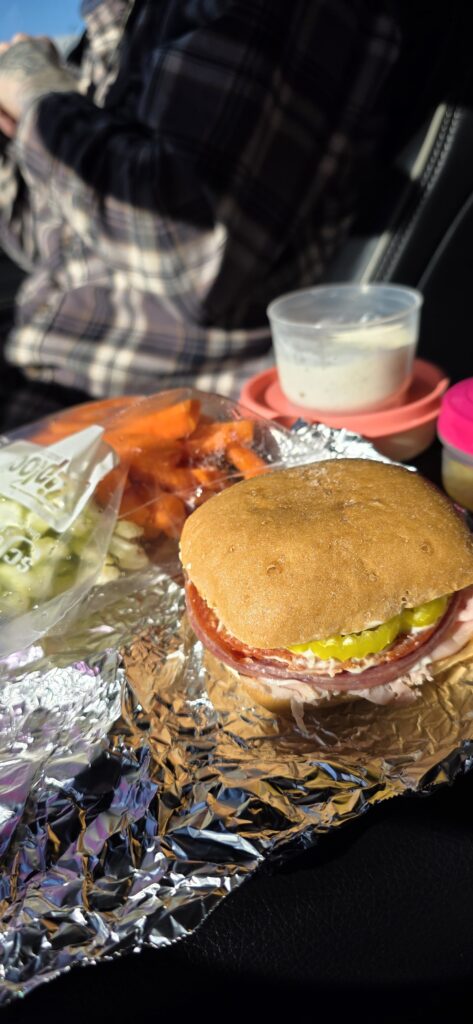
One of my most reliable travel lunches is a sandwich warmed in the Hot Logic.
Sometimes I make the entire sandwich at home, wrap it in foil, and warm the whole thing while we drive. But many times I only warm the bread.
Gluten-free breads often taste much better when they’re warmed. So I’ll heat just the bread in the Hot Logic and then add the fillings afterward.
For example, I might warm:
- gluten-free ciabatta
- a gluten-free pita
- a gluten-free wrap
Then once it’s warm, I’ll add things like:
- safe deli meat or sliced cooked meat that fits your dietary needs
- cheese, if you tolerate dairy
- tuna salad or chicken salad
- egg salad
- vegetables like avocado, lettuce, tomato, cucumber, or sprouts
- condiments such as mayonnaise, mustard, or whatever you normally use
You can mix and match whatever ingredients work for you. The point is simply that warming the bread first makes almost any sandwich taste better, especially when you’re using gluten-free bread.
Sometimes the bread is the only part that really needs warming.
Tuna or Chicken Salad at a Picnic Table
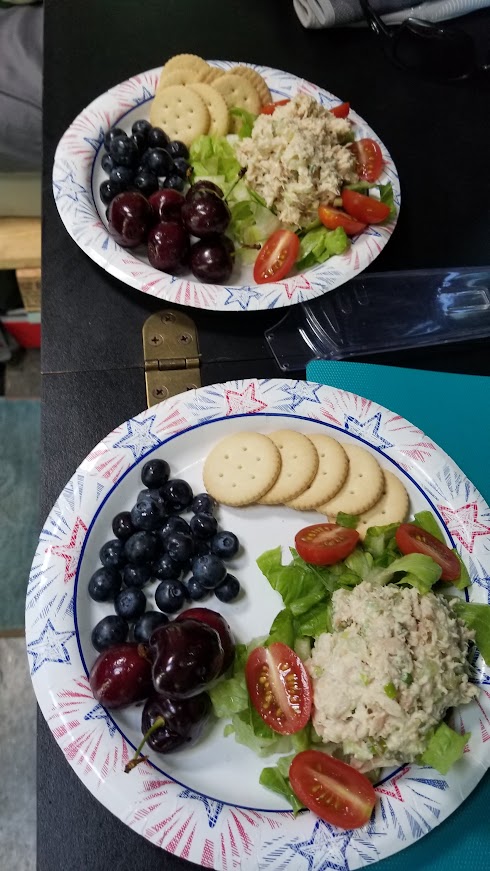
Another lunch I rely on a lot is tuna salad made right on the road.
Before leaving home, I chop:
- celery
- onion
- pickles
Those go into a small snack-size bag and travel in the cooler.
I also keep a small leak-proof container of mayonnaise with my food supplies.
When it’s time for lunch, I simply open a can of tuna and mix it with the vegetables and mayonnaise. Sometimes I use a bowl, but other times I just mix everything directly in the bag.
Then I scoop it up with:
- crackers
- vegetable sticks
- or whatever else I brought along.
You can do the exact same thing with canned chicken.
It’s simple, it’s filling, and it doesn’t require much equipment.
Hard-Boiled Eggs (and Roadside Deviled Eggs)
I also travel with boiled eggs quite a bit because they’re easy protein.
Sometimes I eat them plain with salt and pepper, but other times I turn them into quick deviled eggs.
I bring a small bag of relish and mix the egg yolks, mayonnaise, and relish together. Then I snip the corner of the bag and squeeze the filling back into the egg whites.
It sounds fancy, but it only takes a minute and makes boiled eggs much more enjoyable.
Lunch doesn’t have to be complicated. Most of the time it’s just simple foods you already prepared at home, assembled at a picnic table or rest stop somewhere along the road.
Dinner on the Road
Dinner depends a lot on where you’re staying that night.
Sometimes you’re in a hotel room with nothing but a microwave. Other nights you might have a kitchenette or even a full kitchen in a condo or Airbnb.
The good news is that simple meals work in all of those situations.
Dinner in a Basic Hotel Room
If all we have is a hotel room, dinner usually stays pretty simple.
One option is to warm something in the Hot Logic that cooked while we were driving.
For example, earlier in the day you can combine:
- a chicken breast
- canned green beans
- a pat of butter
- a few seasonings
Place it in the Hot Logic and let it cook slowly while you drive. By the time you reach the hotel, dinner is already finished.
Another great option is frozen soup portions.
Whenever I make soup at home, I freeze it in cups and pop the frozen portions into freezer bags. When we travel, I bring a few of those “soup pucks” along.
They thaw during the day in the cooler, and then I warm them in the Hot Logic for a hot homemade dinner.
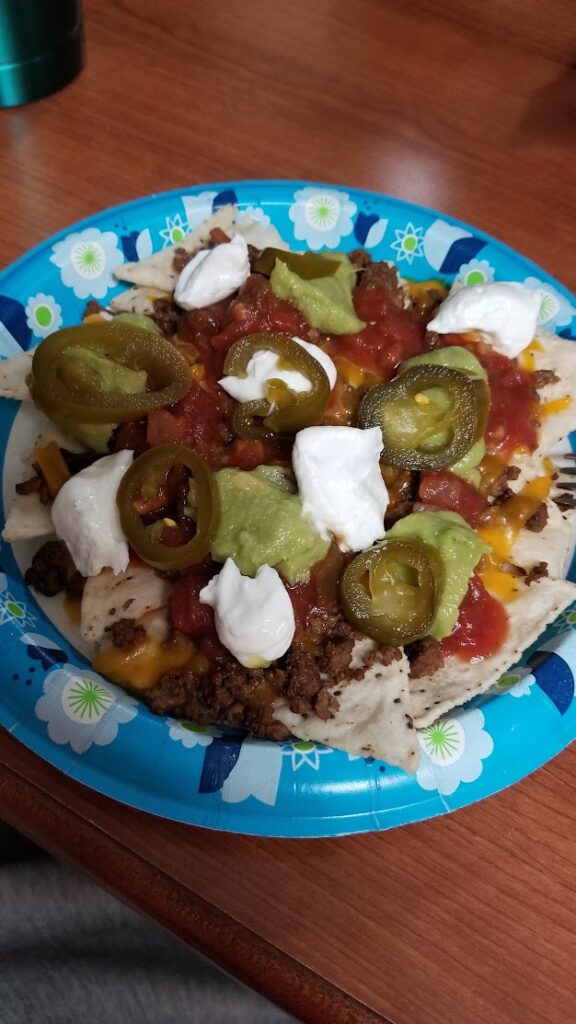
Nachos are also very easy in a hotel room with only a microwave. If you already cooked taco meat ahead of time, dinner can be as simple as:
- tortilla chips
- taco meat
- cheese
- salsa
- whatever toppings you have available.
Everything heats quickly, and dinner is ready in minutes.
Occasionally we’ll also grab takeout somewhere along the way. Barbecue is one example where you can sometimes order plain meat and skip the sauces and sides, but everyone’s dietary restrictions are different, so that option doesn’t work for everyone.
Hotels with Kitchenettes
Whenever possible, we try to stay in hotels with small kitchens.
Chains like Candlewood Suites or Staybridge Suites (IHG) often include a stovetop and basic cookware, and many times they cost about the same as a regular hotel room.
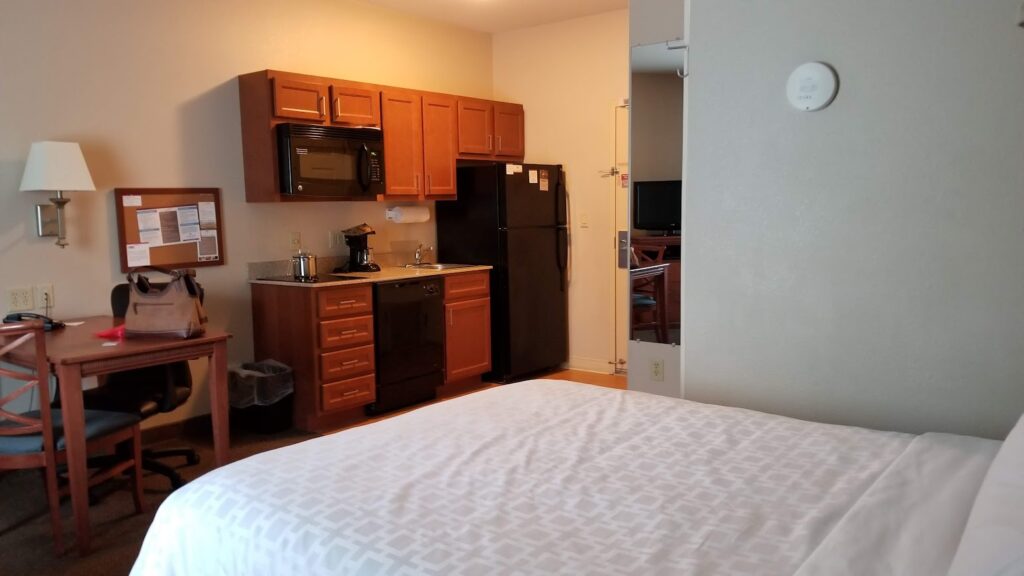
When we have access to a small kitchen, dinner becomes much easier.
One of my favorite quick meals is a ham, sweet potato, and kale skillet.
Before leaving home I chop sweet potatoes and toss them lightly with oil so they don’t oxidize. Then at the hotel I cook them slowly in a covered skillet until they soften. Near the end I add kale and diced ham or smoked sausage and let everything heat through.
It’s simple, filling, and only uses one pan.
Other easy stovetop dinners might include:
- pasta with marinara sauce
- rice with canned chicken and vegetables
- simple skillet meals with whatever ingredients you have available
Nothing fancy — just real food.
Condos and Airbnb Kitchens
When we stay somewhere with a full kitchen, dinner becomes even easier.
At that point it’s basically the same as cooking at home. But even then, we usually keep things simple because we’d rather spend our time exploring than cooking elaborate meals.
Tacos and nachos show up again pretty often because they’re easy and flexible.
Crockpot meals are also great for travel days when you plan to be out exploring. You can assemble the ingredients before leaving in the morning and come back to dinner already finished.
A few examples include:
- Italian beef
- vegetable soup
- chicken, potatoes, and green beans
These kinds of meals don’t require much effort, and they make it easy to feed everyone after a long day out.
Simple Travel Meal Planning Tips
When planning meals for a trip, I try to keep things simple.
First, I choose meals I already cook confidently at home. Travel days are not the time to experiment with brand-new recipes.
Second, I focus on bringing ingredients instead of fully prepared meals whenever possible. That way I can mix and match foods depending on what sounds good that day.
Finally, I plan for flexibility. Some meals are cooked, some are assembled, and sometimes dinner is simply whatever safe food we can find along the way.
The goal isn’t perfection — it’s simply making sure you always have something safe to eat.
The Real Goal
Travel meals don’t have to be complicated.
Sometimes dinner is a home-cooked meal in a condo kitchen.
Other times it’s soup warmed in a hotel room or a sandwich eaten at a picnic table.
The real goal is simply this:
making sure you always have something safe to eat so you can relax and enjoy the trip.
When you’re ready, the next step is learning how to build the foundation that makes all of this possible.