Pantry Box System
Traveling with food allergies or dietary restrictions can make even simple trips stressful.
Most travel advice assumes you can stop anywhere and grab a meal. But when certain foods make you sick, that isn’t always possible. Restaurants can be unpredictable, convenience stores rarely have safe options, and even grocery stores don’t always carry what you need.
The Pantry Box System is the solution my husband and I developed after years of trial and error.
It’s a simple way to travel with the foods you trust, cook simple meals on the road, and stay flexible no matter where you end up.
Instead of hoping you’ll find something safe to eat, you bring the basics with you.
What Is the Pantry Box System?
The Pantry Box System is exactly what it sounds like: a portable version of the staples you normally keep in your pantry at home.
It allows you to cook simple meals while traveling using foods that already work for your body.
The system combines four basic components:
Pantry Box
Cooler
Cab Cooler
Cooking and Heating Tools
Together, these make it possible to travel for days or even weeks without relying on restaurants.
You’re not packing every meal ahead of time.
You’re bringing the tools and ingredients that allow you to create meals wherever you are.
The Pantry Box
The pantry box holds the dry goods and staples that make cooking possible while traveling.
These are the same kinds of ingredients you normally keep in your kitchen at home. Things like:
olive oil
vinegar
broth
instant potatoes or rice
gluten-free noodles
thickeners like cornstarch, arrowroot, or tapioca starch
basic spices
I also keep a number of shelf-stable foods in the pantry box. These become especially important when traveling through remote areas where grocery stores may be limited or when you simply need something quick and reliable.
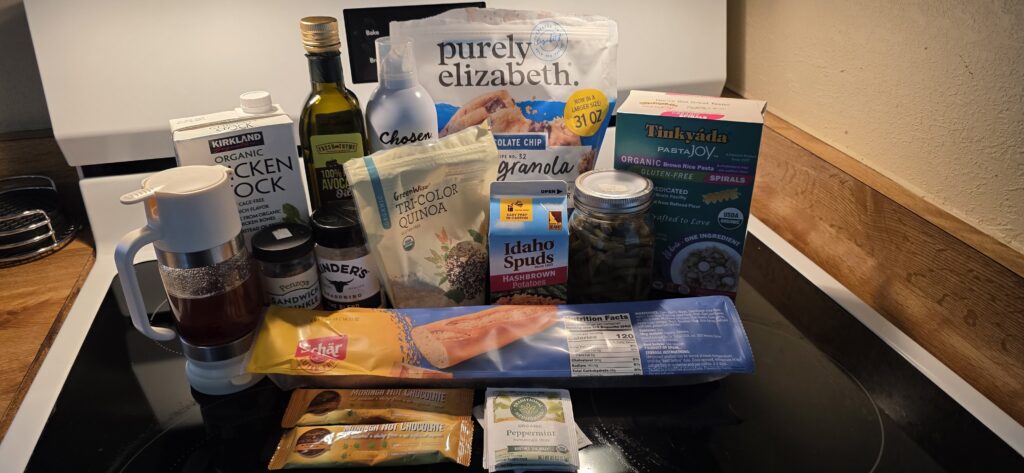
Examples include:
canned vegetables
canned fruit
beans
shelf-stable proteins such as tuna or salmon
canned meats like chicken, beef, or pork
These foods may not always be the most exciting meals, but they are incredibly useful when fresh food isn’t available or when plans change unexpectedly.
The goal of the pantry box isn’t to pack every meal ahead of time. The goal is to bring the ingredients that allow you to turn whatever you find into something you can actually eat.
The Cooler
The main cooler carries refrigerated food for the trip.
This is where we pack things like:
leftovers from home
fresh ingredients
meat
vegetables
prepared meals that travel well
A good cooler allows us to bring several days of food with us so we’re never forced to rely on restaurants.
It also gives us flexibility. If we find a good grocery store along the way, we can buy fresh ingredients and add them to the cooler for later meals.
I always have cooler packing list ready when it’s time to pack, but I also put everything that is in our fridge that will go bad before we return, into the cooler as well. It’s not unusual to find half an onion or a small container of assorted berries shoved in there when we get to our destination.
The Cab Cooler
The cab cooler is a smaller cooler that stays inside the vehicle.
This cooler holds travel-day meals, snacks, and anything we might need while driving.
Instead of digging through the larger cooler every time we stop, the cab cooler keeps everything easily accessible.
This is especially helpful on long travel days when we stop at rest areas, scenic pull-offs, or parks with picnic tables to eat.
Having food ready to go makes travel days much easier and removes the pressure to find safe food on the road.
Cooking and Heating on the Road
One of the most important parts of the system is having a few simple ways to cook or heat food while traveling.
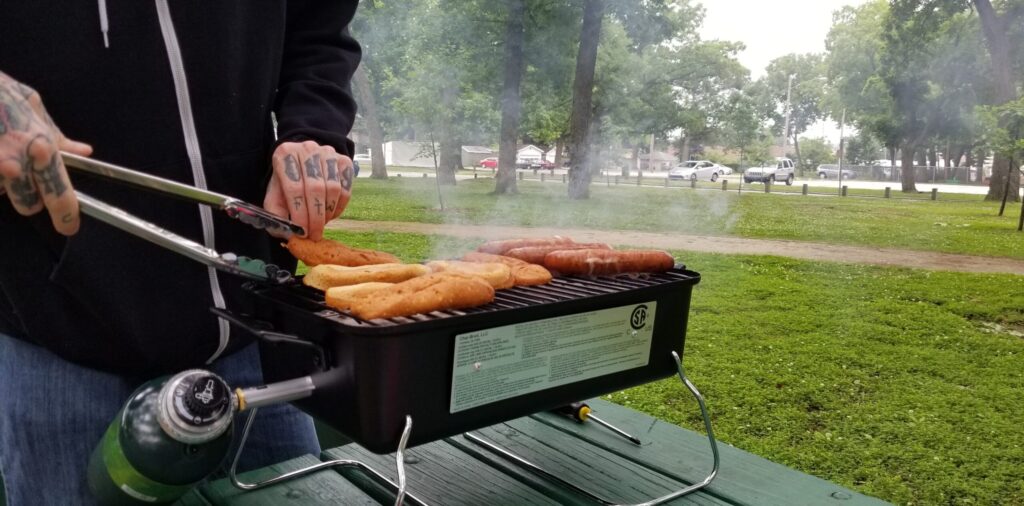
Sometimes we just need to warm up leftovers. Other times we cook full meals at picnic tables, parks, or even rest areas along the highway.
Some of the tools we regularly use include:
Hot Logic portable food warmer
A two-burner camp stove
A tabletop grill
A small hiking stove
Each of these tools serves a slightly different purpose.
The Hot Logic is perfect for reheating meals in the car or in a hotel room.
The hiking stove is excellent for quickly boiling water for things like soup, tea, or simple meals.
A camp stove allows you to cook skillet meals when you have a place to set up.
And a tabletop grill makes it possible to cook meat or vegetables almost anywhere there’s a picnic table.
These tools give you options, which is what makes the Pantry Box System work. You can see the exact tools that I use here.
Why This System Works
The Pantry Box System works because it removes uncertainty.
Instead of wondering what you’ll be able to eat, you already have the ingredients and tools you need.
That flexibility changes everything.
If you find a grocery store with great produce, you can cook.
If you’re parked at a rest area, you can heat a meal.
If you’re staying in a hotel room, you can still eat safely.
The system doesn’t depend on one specific location or kitchen setup. It works in hotel rooms, cabins, campgrounds, rest areas, and parking lots.
It Doesn’t Have to Be Perfect
One of the biggest mistakes people make when starting this system is thinking they have to plan every meal perfectly.
You don’t.
The pantry box simply gives you options.
Sometimes we cook full meals.
Sometimes we heat leftovers.
Sometimes we grab something simple and add our own safe sides.
The goal isn’t perfection.
The goal is freedom and flexibility while traveling.
Start Simple
If you’re building your first pantry box, start with a few items you use all the time.
Think about the ingredients you reach for most often in your kitchen.
Those are the foods that belong in your pantry box.
As you travel more, the system naturally grows and improves.
Every trip teaches you something new about what makes travel easier.
Learn the Pieces of the System
If you’d like to explore each part of the system in more detail, the rest of the site breaks things down further.
Pantry Box Gear
Travel Cooking
Meal Ideas
Each section explains a different part of the system so you can adapt it to your own dietary needs and travel style.
If you want a structured way to plan your food for travel, get your copy of my printable Travel System Workbook.