Cooking While Traveling With Food Allergies
Cooking while traveling can sound complicated, especially if you have food allergies or dietary restrictions. Restaurants can feel risky, grocery stores are unfamiliar, and hotel kitchens rarely have the tools you’re used to.
But once you have a simple system in place, it becomes surprisingly manageable.
This is the exact process I use when preparing food for a week away. I call the night before a trip “list day,” because that’s when I sit down and map out what we’re actually going to eat.
Step 1: Start With Meals You Already Know How to Make
The most important rule I follow is simple:
I only plan meals that I already cook confidently at home.
Travel is not the time to experiment with new recipes. When you’re away from your own kitchen, sticking with familiar meals keeps everything simple and low-stress.
For a typical week away, I usually plan about five to seven easy meals.
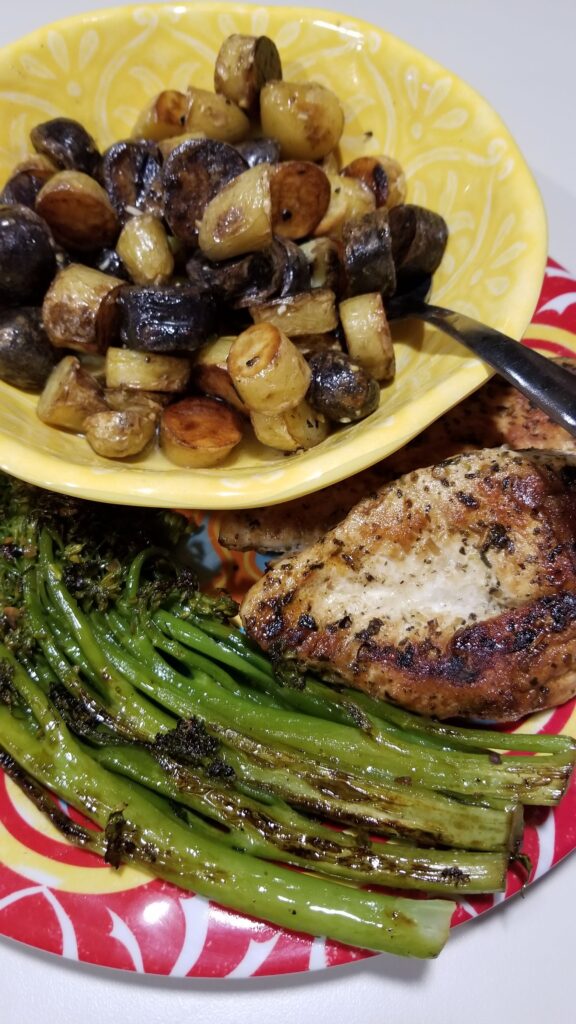
For example, a recent trip looked something like this:
- Italian beef served over mashed potatoes or gluten-free baguettes
- Tacos, nachos, or taco salad (very versatile and often used more than once)
- Grilled chicken with broccolini and roasted fingerling potatoes
- Burgers on the grill
- Pot roast with root vegetables in the crockpot
- Deli meat sandwiches with chips and crudités
- Antipasto-style salad with greens, vegetables, and deli meat
These are meals I can cook without needing a recipe.
That makes a big difference when you’re cooking away from home.
Step 2: Take Inventory Before You Shop
Once I have my meals written down, the next step is to look through my pantry, refrigerator, and freezer to see what I already have.
Most of the time I already have a large portion of what I need at home.
For example, on one recent trip I already had:
- A chuck roast in the freezer for Italian beef
- Italian seasoning and beef broth in the pantry
- Ground beef for tacos and burgers
- Taco seasoning, chips, and shredded cheese
- Jalapeños in the refrigerator
That meant I only needed to add a few things to my grocery list:
- Salsa
- Sour cream
- Hot dogs
- Gluten-free bread or buns
- Fresh vegetables
I also bring a few simple flavor boosters that make almost any meal better:
- onion
- garlic
- a few favorite spice blends
Some of the blends I travel with often include Kinder’s “The Blend,” McCormick Montreal Steak Seasoning, and several favorites from Penzeys Spices like Sandwich Sprinkle, Fox Point, and Revolution.
Those seasonings make it easy to turn simple ingredients into something that tastes great, even when you’re cooking away from home.
Another thing I keep in mind during this step is that if there are ingredients I don’t already have at home, I usually wait to buy them at my destination.
This reduces risk. If travel plans change, roads close, or delays happen, you’re not stuck with a cooler full of brand new groceries that might spoil before you arrive.
Step 3: Prep a Few Things Before Travel Day
A little prep work the night before leaving makes travel days much easier.
For this trip I cooked a batch of taco meat ahead of time. Taco meat is incredibly versatile and reheats easily in a Hot Logic while you’re driving. It can quickly turn into tacos, nachos, or taco salad later.
I also prepared several ready-to-eat vegetables for snacking and quick meals:
- celery sticks
- carrot sticks
- sliced cucumber
- bell pepper strips
Having vegetables ready like this means you always have something fresh to eat without needing to stop and prep food.
I also shredded lettuce and packed mixed salad greens into a bento box.
Another thing I prepared ahead of time was rolled deli meats made from uncured ham, salami, and pepperoni. These work well as protein snacks, or they can be sliced and added to a salad.
Finally, I boiled a few hard-boiled eggs. Eggs are one of the easiest protein snacks to bring along, and since salt, pepper, and spices are always in my pantry box, it’s easy to change the flavor depending on what you’re in the mood for.
Doing this small amount of prep work ahead of time gives you flexible ingredients that can turn into several different meals while you’re traveling.
Step 4: Plan Your Travel Day Meals
Before packing the coolers, I also think through what we’ll eat on travel days.
For example, on one recent trip our first travel day looked like this.
Lunch on the Road
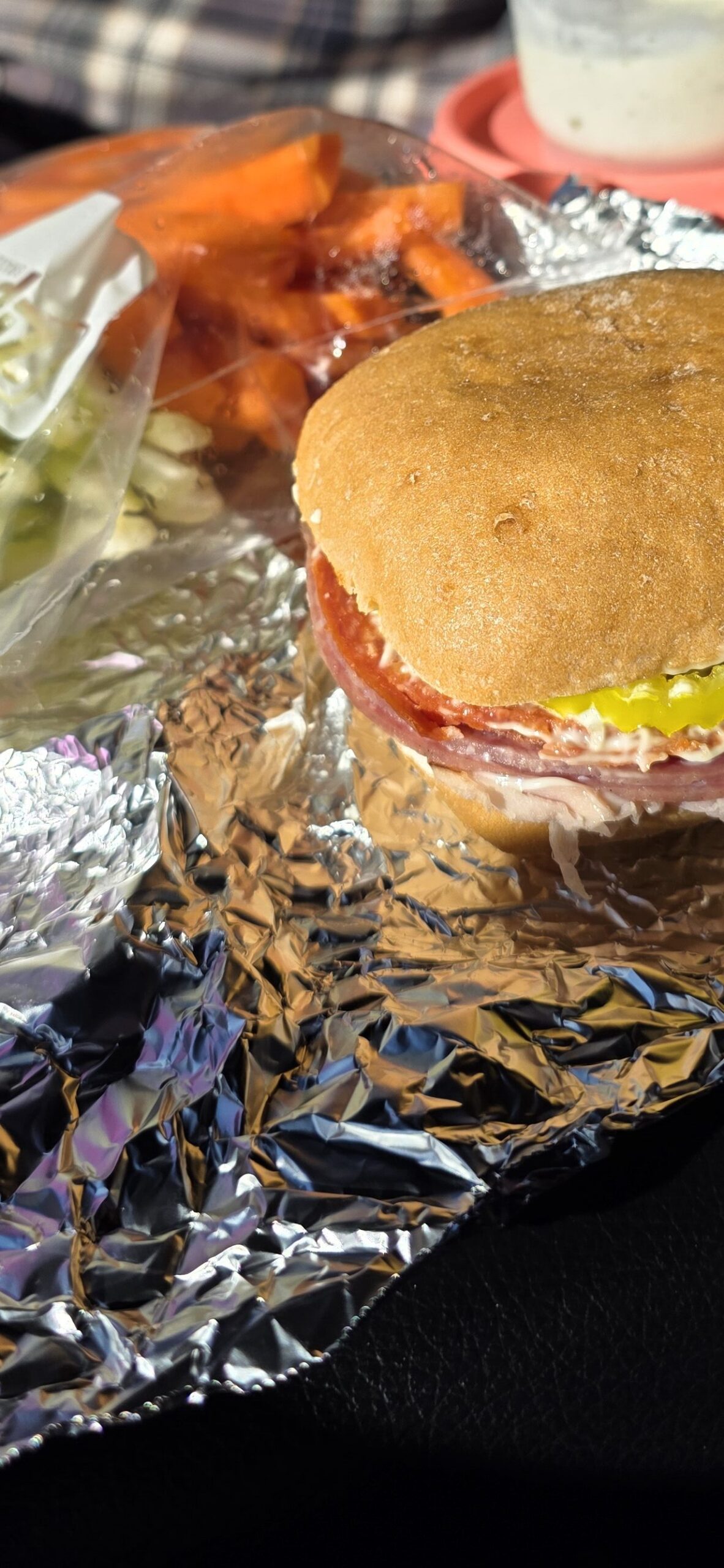
Before leaving home, I made deli sandwiches on gluten-free ciabatta rolls.
About twenty minutes before we planned to stop for lunch, we put the sandwiches into the Hot Logic so they could warm up while we drove.
When we stopped, we had warm sandwiches ready to eat along with:
- crudités (carrots, celery, and cucumber)
- homemade yogurt dip seasoned with Sandwich Sprinkle
It was simple, filling, and easy to eat at a picnic table.
Dinner on Travel Day
Later that evening we happened to pass a roadside barbecue stand and decided to grab a pound of brisket and sides to go.
When we arrived at the hotel that night, I ate some brisket along with vegetables and a small salad I had already packed, and my husband ate brisket and the sides he chose.
Step 5: What To Do When Everyone Else Wants Fast Food
Lunch can actually be the trickiest meal while traveling.
Sometimes everyone else in the car wants something quick from a drive-through. Instead of stressing about it, I simply make sure I always have something for myself.
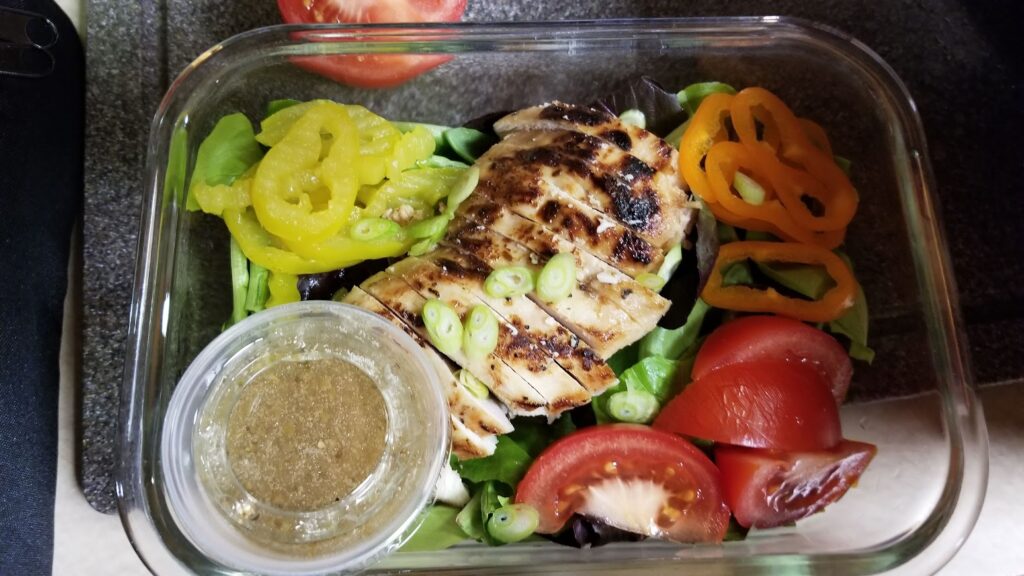
One of my go-to solutions is a large, well-built salad packed in a bento box. It starts with mixed greens and gets topped with vegetables, some kind of meat, and whatever extras I happen to have packed.
This works perfectly when stopping for fast food. The rest of the group can grab what they want from the restaurant, and I can sit down at the same picnic table or outdoor seating area and eat the meal I brought.
It’s simple, it’s safe, and everyone still eats together. I always bring a salad in the cab cooler, and if I don’t end up eating it for lunch, we split it up for a dinner side later. That way it isn’t wasted, but it also makes for a stress free lunchtime every day away from home.
I also usually pick up high-quality deli meat at the destination grocery store. I don’t eat a lot of deli meat at home because it is processed, but while traveling it can be incredibly useful. It gives me the option of a quick sandwich or an easy protein topping for a salad.
Step 6: Cooking During the Week
Once we settle into the condo and put our food away, the rest of the week usually becomes pretty relaxed.
Even though I planned several meals ahead of time, I don’t assign them to specific days. Instead we cook whatever sounds good based on what our plans are for the day.
Sometimes we cook dinner or take advantage of the grills offered at the resort.
Sometimes we eat leftovers.
Sometimes we discover a restaurant nearby and decide to try it.
One strategy I use often is saving crockpot meals for days when we’ll be gone most of the day.
If we’re heading out to hike or explore a park for several hours, I’ll put a meal into the crockpot before we leave.
A pot roast with root vegetables works beautifully for this. Another favorite is:
- chicken breast
- potatoes
- green beans
- Fox Point seasoning
- a little chicken broth
Everything cooks while we’re out exploring, and dinner is ready when we return.
Whenever I cook crockpot meals like these, I intentionally make enough for leftovers.
Those leftovers get divided into Hot Logic containers, which makes them perfect for reheating later as a quick lunch or travel meal.
Step 7: Planning for the Trip Home
The trip home usually moves faster than the trip there.
On the way to our destination we tend to stop at random roadside attractions. But on the way home, we’ve already had our adventure and we’re usually ready to get back to our own bed.
Because of that, the return trip meals are usually even more flexible.
Sometimes I cook another batch of taco meat before leaving so we can make nachos on the road.
Other times we simply pack leftover crockpot meals into the Hot Logic containers so they’re ready to reheat during travel.
And sometimes we just assemble another deli sandwich or snack on the leftover ingredients we brought with us.
Because we usually cook more food than two people can eat in one sitting, there are almost always leftovers that can be used on the drive home.
The Real Secret: Flexibility
At first glance this pantry box system might look very planned.
But the truth is that it works because it isn’t rigid.
You bring enough food and flexible ingredients that you can adjust as you go.
Sometimes you cook.
Sometimes you eat leftovers.
Sometimes you stop at a barbecue stand you didn’t know existed.
Because you already have food that works for your dietary needs, none of those decisions become stressful.
Instead of worrying about what you’re going to eat, you can focus on enjoying the trip.