That Time the Instant Pot Blocked My View
This post may contain affiliate links. As an Amazon Associate, I earn from qualifying purchases, at no additional cost to you.
The first real road trip we took after I finally got my health stable enough to travel again didn’t start with confidence.
It started with me sitting on the floor crying and asking my husband if we could bring the toaster.
Travel had become complicated. Food had become complicated. My body had rules now, and if I didn’t follow them, I would get sick. The idea of being away from home—even for something as wonderful as a road trip—felt overwhelming.
And the toaster mattered more than it probably should have.
Back then, gluten-free bread was nothing like it is today. These days I can buy Canyon Bakehouse bread at Costco, and while I still prefer it toasted or warmed, it’s perfectly edible straight from the package.
That wasn’t the case then.
The only gluten-free bread I had found that wasn’t overly processed came from a tiny little bakery in Tampa, Florida. It was a dense millet-and-flax bread, and if you didn’t toast it, it was… honestly pretty terrible.
Toasting it transformed it. Without a toaster, it was barely edible.
So yes, I was sitting on the floor crying about a toaster.
But eventually we packed the car.
And when I say packed, I mean packed.
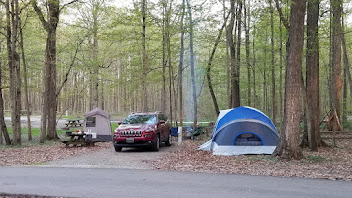
There was camping gear, a tent for sleeping, a tent for the kitchen, a tent for the bathroom, and enough cooking equipment to feed a small village. At one point I glanced in the rearview mirror and realized I couldn’t see anything behind us because the Instant Pot—still in its box—was sitting directly in my line of sight.
For the first hour or two of the drive, I kept asking Shane to check behind us because I literally couldn’t see out the rearview mirror.
But we were doing it.
We were actually going.
Our plan was simple: we were going to camp our way around Lake Michigan.
Our first stop was a little cabin in Irons, Michigan, near the Manistee National Forest. It was a quiet place with a shared gas grill and individual fire pits outside each cabin. The kind of place where people sit outside in the evening and watch their fires burn down.
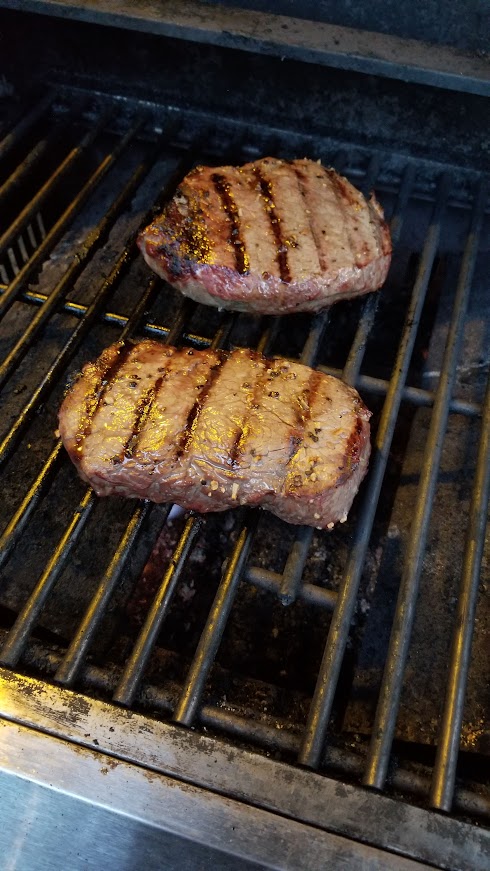
That night we cooked dinner on the common grill—either pork chops or steaks (I have the photo, so I should probably check). It was the first moment of the trip where I started to feel like maybe this whole idea wasn’t crazy after all.
Then the next morning happened.
As we were getting ready to leave, we ran into the people staying in the cabin next to us. We asked how they were doing, and they told us a story that made my stomach drop.
The day before, they had been kayaking the White River. Somewhere along the trip, their kayak tipped over. When it did, they lost their car keys in the river.
And those keys were the only thing they had taken with them.
Their phones were locked in the car. Their wallets were locked in the car. Everything they owned for the trip was locked in the car.
They had managed to contact a friend who overnighted them a spare set of keys—but it was Sunday, and overnight shipping doesn’t include Sunday delivery. They were stuck there until Monday with no car, no money, and no way to go get food.
So I did the only thing that felt right.
I gave them almost all of our food.
Not the things I specifically needed for my own dietary restrictions—I kept my gluten-free bread and a few safe items—but the rest of it went to them. Chicken breasts. Hamburgers. Some canned vegetables. Fresh vegetables we had packed.
Everything we could spare.
It felt like the right thing to do.
But it also meant something else.
I had spent days planning food for this trip. I had fought through anxiety to pack everything we might need. I had cried about bringing a toaster.
And at our very first stop, I gave most of it away.
So now we had a new problem.
We were about to continue a road trip through small-town Michigan with almost no food.
There were no big grocery chains where we were. No Kroger. No Publix. No H-E-B. Just small independent grocery stores scattered through little towns.
So we adjusted.
We drove to the nearest store we could find and bought just enough food for that night. Nothing fancy. Just enough to get by.
That night we camped in Whitehall, Michigan at an absolutely beautiful campground. We cooked dinner, figured things out as we went, and slowly settled into the rhythm of the trip.
And somewhere along the way I realized something.
The thing I had been most afraid of—running out of safe food while traveling—had already happened.
And we were still okay.
That trip around Lake Michigan turned into one of the most meaningful trips we’ve ever taken. Not because everything went according to plan, but because it didn’t.
Sometimes resilience looks like packing your entire kitchen in the back of a car.
Sometimes it looks like giving your food away and starting over in a tiny grocery store in the middle of nowhere.
And sometimes it starts with sitting on the floor, crying, and asking if you can bring the toaster.